How AI-Powered Smart Luggage Scales With App-Connected Weight History Are Helping Frequent Packers Identify Chronic Overweight Patterns Before Check-In
Amanda Foster
10/20/2026
4 min read
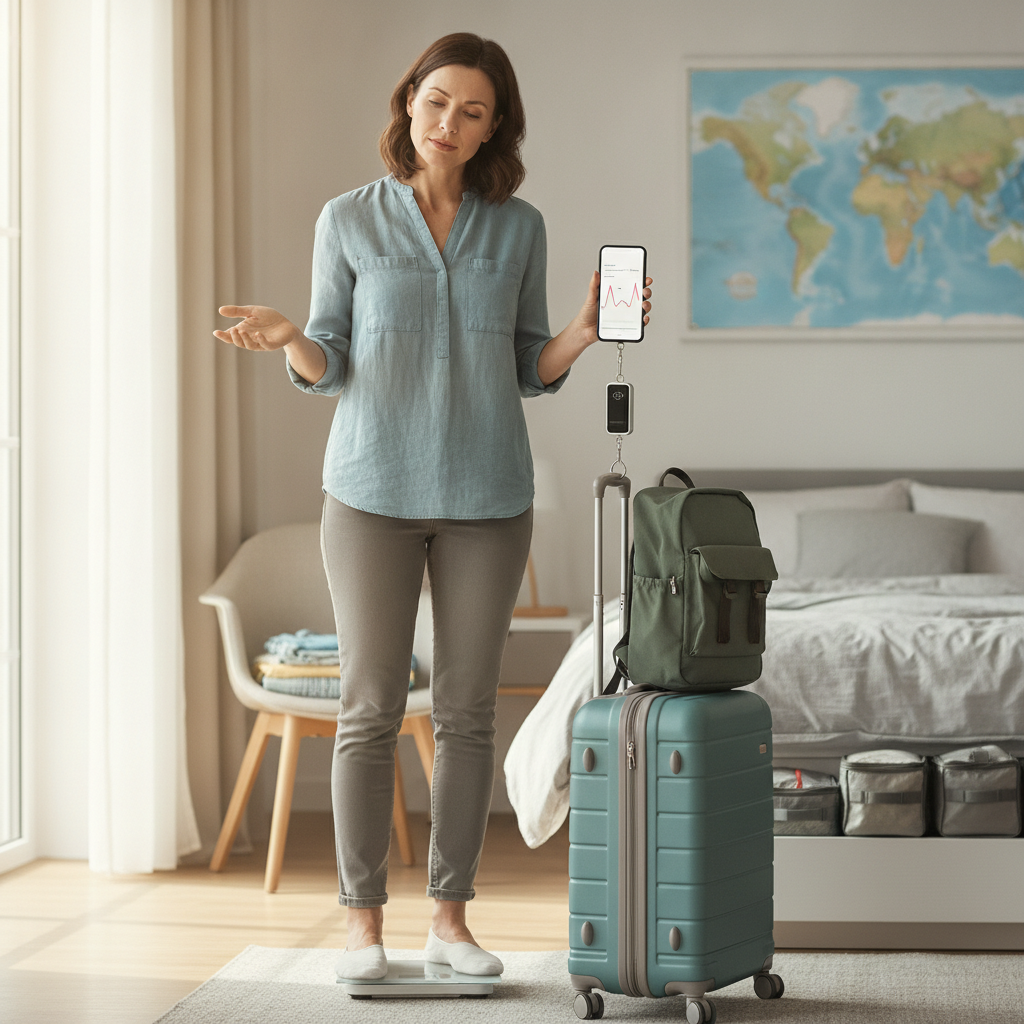
Frequent travelers who routinely pay overweight baggage fees are often caught in a pattern they can't easily see — not because they pack carelessly, but because they lack a reliable way to track what they're actually doing trip after trip. AI-powered smart luggage scales are changing that dynamic by pairing real-time weight readings with app-connected history logs that reveal chronic packing habits over time. The result is a shift from reactive guessing at the airport to proactive adjustment at home.
The Core Function of App-Connected Weight Tracking
At their most basic level, smart luggage scales perform the same job as their analog predecessors — they tell you how heavy a bag is. What separates AI-integrated models like those from Mycarbon and Sharge is the accompanying app layer that stores every weigh-in as a data point. Over several trips, these records build a timeline that makes patterns visible. A traveler might weigh a bag at 49.8 pounds before a business trip to Frankfurt and 50.2 pounds before a leisure trip to Lisbon, without ever connecting the two events as part of a recurring problem.
How Historical Data Exposes Packing Blind Spots
The behavioral insight embedded in weight-history apps is what makes them meaningfully different from a standard handheld scale. When a traveler can scroll through six months of pre-departure weights and see that their bag consistently lands within a pound of the airline limit — regardless of destination or trip length — the implication is clear: they are a chronic over-packer who has been lucky, not careful. Apps from brands like Renpho and Sharge allow users to tag trips by airline, route, and bag type, making it easier to spot correlations between specific destinations and heavier loads.
The Role of AI in Pattern Recognition and Alerts
Beyond simple logging, newer models incorporate lightweight AI functions that analyze weight trends and surface alerts based on user behavior. If a traveler's checked bag has exceeded the standard 50-pound threshold on three of their last five international trips, the app can flag this before the next packing session begins. Some systems go further by integrating with airline baggage policies pulled from flight booking apps, automatically calculating whether the current trip's allowance is stricter than usual. This removes the cognitive burden of remembering each carrier's specific rules.
What Frequent Business Travelers Are Finding Most Useful
For road warriors flying on carriers like United, Lufthansa, or Singapore Airlines — where business class allowances vary significantly by route — the trip-tagging feature has become a practical planning tool rather than a novelty. Knowing that their bag averaged 47 pounds on Asia-Pacific routes but only 43 pounds on domestic segments helps travelers make smarter decisions about what to leave behind. The data also reveals which trip types produce the heaviest bags: conferences tend to generate heavier loads than leisure trips, largely due to printed materials, gifts, and branded merchandise.
Weight Thresholds, Airline Rules, and Smart Calibration
One underappreciated feature in higher-end smart scales is auto-calibration, which compensates for surface angle and hand movement to produce consistent readings across sessions. Scales from Mycarbon and similar manufacturers now offer Bluetooth calibration through their apps, ensuring that the weight recorded at home matches what the airline counter will show. For travelers navigating low-cost carriers like Ryanair or AirAsia — where even a single kilogram over the limit triggers a fee — precision at the scale level is not a luxury; it's the difference between budgeted travel and unexpected costs.
Practical Steps for Using Weight History Effectively
If you're ready to use a smart scale as a packing behavior tool rather than just a convenience gadget, a few habits make the data far more useful. Start by weighing your bag at the same point in your packing process every time — ideally the night before departure, fully packed including personal items you plan to carry on. Tag each entry in the app with the destination and airline so filtering becomes easier later. Review your six-trip average before every new packing session, not just the most recent reading. If you notice that certain trip types consistently push you toward the limit, create a dedicated packing list for that category and build in a weight ceiling of two to three pounds below the airline maximum to give yourself a reliable buffer.
The direction this technology is heading points toward deeper integration with travel booking platforms and smart suitcase sensors that weigh contents passively as items are packed. Brands already experimenting with embedded luggage scales — where the measurement happens inside the bag itself rather than through a handheld device — are likely to accelerate that development. For frequent packers, the shift from single-use weighing to longitudinal weight awareness represents a genuine change in how pre-departure preparation works, and the tools to support that shift are already widely available and steadily improving.
More Trending Articles
How Supermarket Deli Counter Pricing Compares to Pre-Packaged Equivalents and Which Categories Consistently Offer Better Value When You Buy by Weight
Jennifer Walsh
10/27/2026