How Traveling the Azores Islands by Inter-Island Ferry Instead of Short-Hop Flights Changes Your Budget and What You Actually Experience Between Islands
Marcus Chen
10/07/2026
6 min read
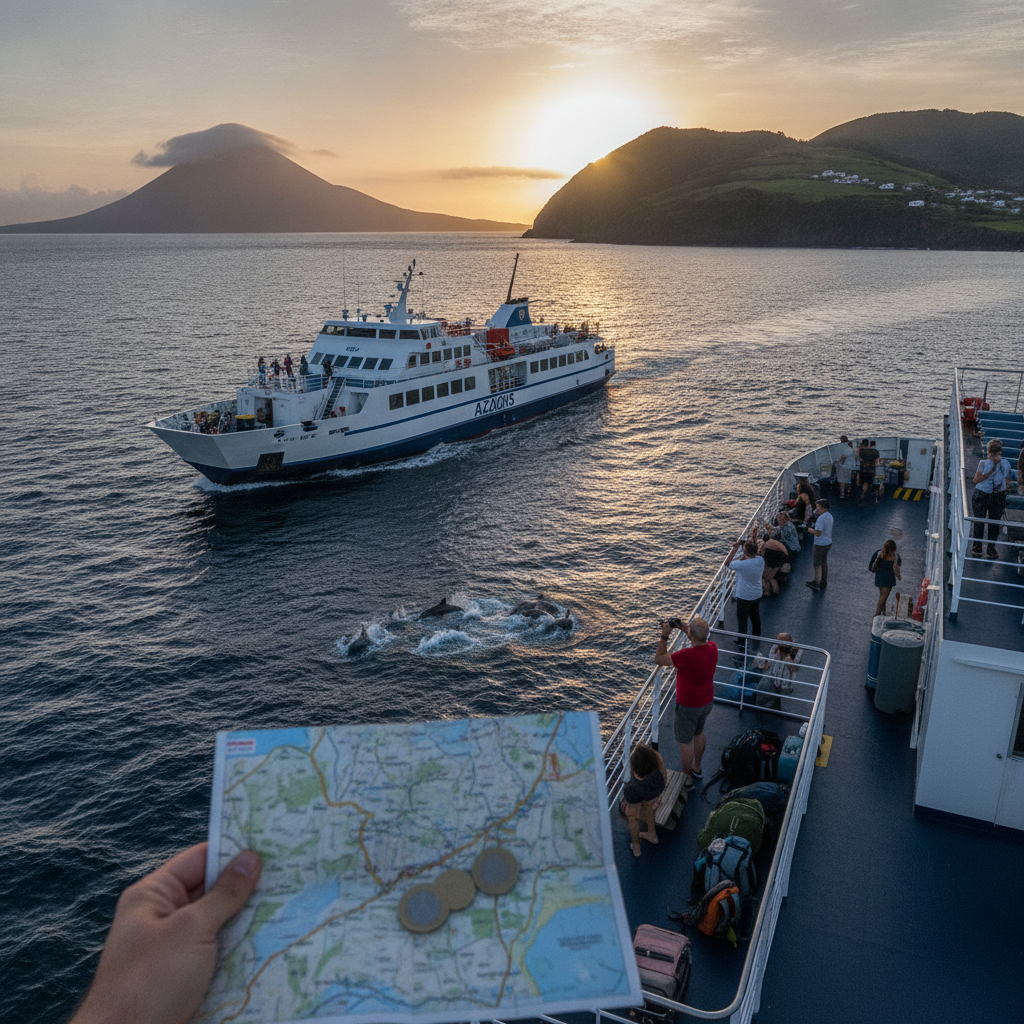
The Azores sit scattered across the North Atlantic like a handful of stones tossed far from Portugal's coast, and most travelers arrive expecting the only sensible way to move between islands is to jump on a SATA Air Açores regional flight and be done with it. That instinct is understandable — the islands are spread across nearly 600 kilometers, and the ferry timetables require planning that flights don't. But travelers who take the time to use Atlanticoline, the main inter-island ferry operator, often find that the extra planning unlocks a fundamentally different kind of trip — one that costs less, moves slower, and delivers far more than a 45-minute cabin view from 10,000 feet.
The Real Cost Gap Between Ferry and Flight
SATA Air Açores tickets between islands like São Miguel and Terceira can run anywhere from moderate to surprisingly steep depending on how far in advance you book. Atlanticoline ferry routes, by contrast, tend to price well below that range for comparable journeys, particularly on the central group connections between Faial, Pico, and São Jorge. When you factor in baggage fees on short-hop flights — which add up quickly if you're moving between three or four islands — the ferry option often comes out meaningfully cheaper on a per-person basis, especially for couples or small groups traveling with checked luggage.
What the Channel Between Pico and Faial Actually Looks Like
The crossing between Horta on Faial and Madalena on Pico takes roughly 30 minutes and is one of the most visually arresting short ferry rides in Europe. The volcanic silhouette of Pico's mountain fills the entire horizon as you approach, a scale that no aerial view from a window seat can replicate at that altitude. Passengers stand on the open deck with the Atlantic wind and the smell of salt air, watching the landscape shift from the colorful marina of Horta — famous among transatlantic sailors — to the dark lava-stone vineyards that UNESCO recognized for their distinctive cultural landscape. That crossing alone justifies the entire ferry-versus-flight debate.
How Slow Movement Reshapes the Itinerary
When inter-island travel is instant, the temptation is to pack more islands into fewer days. Flights enable that kind of rushed movement, but they also flatten the experience — each island becomes a checklist stop rather than a place with its own rhythm. Ferry travel imposes a natural pace that most travelers end up appreciating. Waiting for a morning departure from Velas on São Jorge means spending the previous evening in a small harbor town, eating grilled limpets at a local restaurant, and waking early to watch the fishing boats leave before yours does. That texture disappears the moment you choose the 40-minute flight instead.
Ferry Schedules and the Planning Reality
The most honest thing to say about Atlanticoline schedules is that they require attention. Service frequency between the central group islands — Faial, Pico, and São Jorge — is reasonably good in summer, with multiple daily crossings. The eastern group connection between São Miguel and Santa Maria is more limited. The western islands of Flores and Corvo see reduced ferry access and often depend on seasonal scheduling, making flights more practical in certain cases. The smart approach is to use ferries for the central and eastern groups where service is consistent, and accept that a flight might make sense for the western extremes where the open-water crossings are longer and ferry options fewer.
Luggage, Weather, and Practical Trade-Offs
Ferry travel in the Azores does carry one genuine variable that flights don't: Atlantic weather. Crossings can be rough, and services are occasionally cancelled during winter swells or storm windows. Travelers who build even a single flex day into their schedule absorb that risk without stress. On the luggage side, ferries are simply more generous — there's no overhead bin to fight for, no weight limit enforced at a check-in counter, and no charge for bringing a surfboard, hiking pack, or box of local wine you picked up in Pico. For longer stays with fuller bags, that freedom has real financial value.
What You Learn About Each Island From Its Port
Every island in the Azores has a ferry terminal that doubles as a kind of social hub — locals picking up deliveries, fishermen offloading catch, café owners starting their morning. Arriving by ferry means entering an island through that working layer rather than through a sterile regional airport outside of town. In Horta, the marina walls are covered with thousands of painted insignias left by sailors who crossed the Atlantic — an ongoing tradition that gives the port a genuinely layered history. Arriving by boat and walking directly into that environment creates an immediate sense of place that passengers on a 20-minute shuttle bus from the airport simply don't get on arrival.
Booking Strategy to Get the Best Ferry Fares
Atlanticoline tickets are available online and tend to be most affordable when booked at least a week or two ahead during peak summer months, when the central group routes see higher demand from Portuguese domestic tourists and international visitors alike. Off-season travel in spring or early autumn often allows for more flexible last-minute booking at lower prices. Combining a multi-island ferry pass — where available for certain route clusters — can reduce the per-crossing cost further. It's worth checking whether your accommodation can advise on local departure times, since some ferry terminals have limited signage in English and schedules can shift slightly by season.
When the Flight Actually Makes More Sense
Ferry travel isn't the right answer for every Azores route. The eastern connection from Ponta Delgada on São Miguel to the western island of Flores involves a significantly longer open-water crossing that most casual travelers won't find practical. For anyone on a tight four-day window who wants to touch three widely spaced islands, flights may simply be the only realistic option. The calculus shifts once you have seven days or more and can concentrate your time in the central group, where the islands cluster close enough for ferry connections to feel effortless. The budget savings and experience gains compound the longer your trip runs.
As the Azores continue attracting a more experience-focused kind of traveler — one less interested in ticking off attractions and more drawn to landscapes, food, and genuine local life — the inter-island ferry is likely to grow in relevance as a travel tool. Atlanticoline has expanded its fleet and routes in recent years, and there's ongoing discussion about improving connections to the western group. Travelers who learn the ferry system now are positioning themselves ahead of a broader shift in how this archipelago gets explored — slowly, deliberately, and considerably closer to the water.
More Trending Articles
How Supermarket Deli Counter Pricing Compares to Pre-Packaged Equivalents and Which Categories Consistently Offer Better Value When You Buy by Weight
Jennifer Walsh
10/27/2026