How Visiting the Cinque Terre in Late October Compares to July in Crowd Density, Trail Access, and Daily Cost Per Person
Marcus Chen
10/21/2026
5 min read
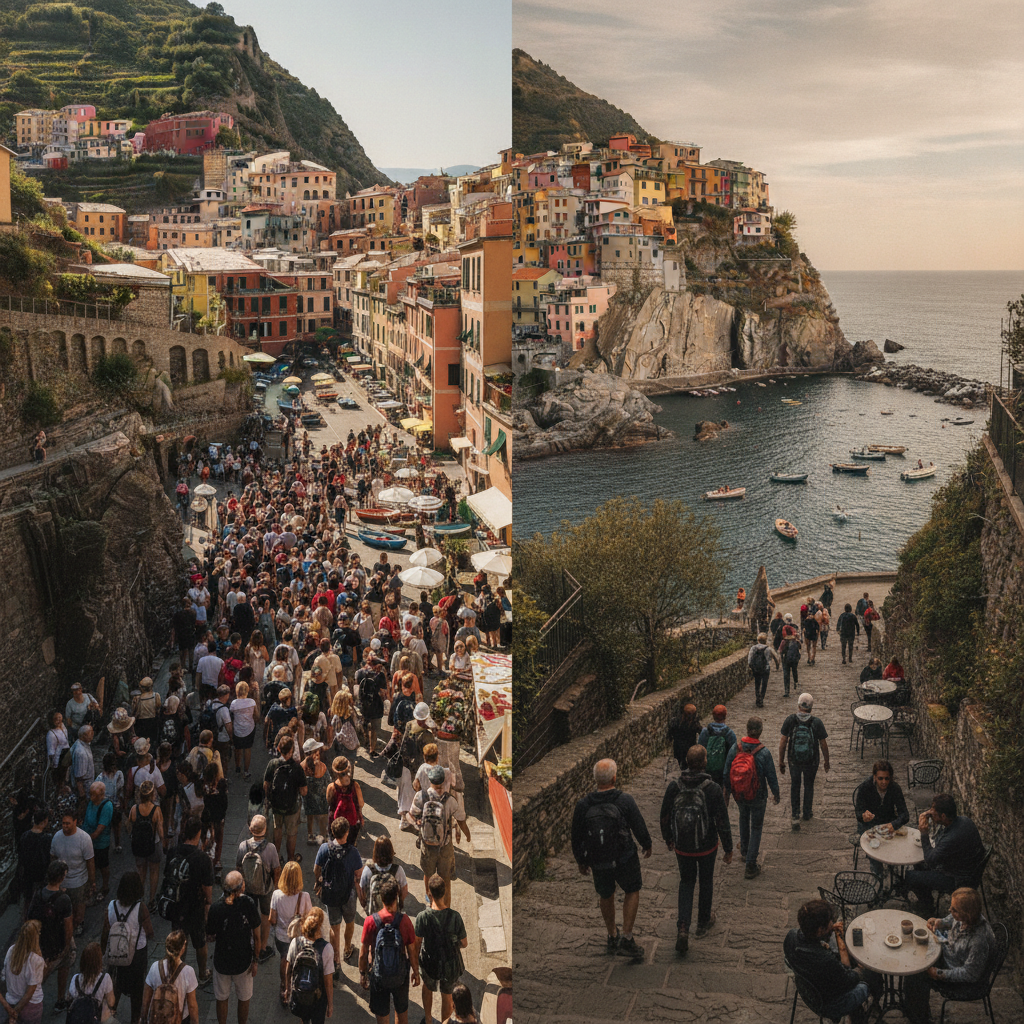
Timing a trip to the Cinque Terre can matter as much as the destination itself, and the gap between a July visit and a late October one is wider than most travelers expect. These five cliffside villages on the Ligurian coast draw millions of visitors every year, and the experience you get depends enormously on when you show up. What feels like a romantic, otherworldly escape in the off-season can feel more like a theme park queue in peak summer — same scenery, completely different mood. Understanding what actually shifts between those two windows helps you make a smarter decision before you book anything.
Crowd Density and the Pace of Each Village
In July, the Cinque Terre operates at full capacity. Vernazza's main square fills with groups rotating through on day trips from Genoa or Florence, the waterfront tables disappear before noon, and the narrow alleyways that wind through Riomaggiore and Manarola become genuinely difficult to move through at peak hours. The Cinque Terre National Park limits trail access on the most popular sections precisely because of erosion caused by this volume of foot traffic, and even with those controls in place, popular viewpoints can feel crowded enough to make a relaxed photograph nearly impossible. Trains running between the villages on the regional line operated by Trenitalia fill up fast, and standing room is common on the short hops between Monterosso al Mare and the southern villages. The summer energy is real and it has its own appeal, but if you're hoping for stillness, July won't reliably offer it.
Late October shifts the rhythm completely. Day-trippers thin out dramatically once European school holidays end, and most cruise ship itineraries have moved off the Ligurian leg by mid-October. You'll still encounter other travelers — the Cinque Terre never goes entirely quiet before November — but the village piazzas become usable again in a way they simply aren't in summer. Mornings in Corniglia or along the harbor in Vernazza carry a quieter quality that lets you actually absorb the place rather than process it. The locals who work in hospitality are also noticeably more relaxed, and that changes the quality of interactions in small but meaningful ways.
Trail Access and What You Can Actually Hike
The trail situation is more nuanced than a simple open-or-closed distinction. The famous Via dell'Amore, connecting Riomaggiore and Manarola, has had an on-and-off access history due to rockfall repairs, so it's worth checking current status through the park's official site before any trip regardless of season. In July, the Sentiero Azzurro — the main coastal trail linking all five villages — is accessible on its open sections but heavily walked, which means you're often hiking single file behind a slow-moving group for stretches that could otherwise be genuinely peaceful. The light is harsh and hot by mid-morning, and the switchback climbs that characterize the trail between Corniglia and Vernazza become uncomfortable in summer heat.
Late October offers a different hiking dynamic. Temperatures drop to a far more pleasant range for walking, typically sitting in the mid-teens Celsius, and the angle of autumn light on the terraced vineyards and painted facades creates a warmth that many photographers and casual visitors find more visually compelling than the bleached brightness of summer. Trail conditions do require attention — autumn rain can make stone paths slippery — but for a prepared hiker in proper footwear, the routes are accessible and far less congested. You'll want to check conditions through the park's Cinque Terre Card platform, which also manages trail fees, and apps like AllTrails carry updated user reports that give you a real-time read on surface conditions after rain.
Daily Cost Per Person and Where the Numbers Shift
The cost difference between July and late October is real, and it shows up across multiple categories rather than in one dramatic line item. Accommodation is the most obvious pressure point. Staying in any of the five villages in high summer means paying peak rates for rooms that book months in advance, and the limited supply of hotels and guesthouses in places like Manarola or Corniglia means prices stay elevated even on weekdays. By late October, many properties have moved to shoulder or low-season pricing, and availability opens up considerably. Booking through platforms like Booking.com or direct through smaller guesthouses often reveals rate drops of thirty to fifty percent compared to the July equivalent room.
Food and drink costs don't shift as dramatically, since the restaurants that stay open through October tend to maintain similar menu pricing year-round. What does change is the availability of tables and the pressure you feel to eat at tourist-facing spots simply because everything else is full. In late October, you're more likely to find a seat at a locally frequented trattoria without a reservation, and that tends to mean better food at the same price point. The Cinque Terre Card, which covers trail access and unlimited Trenitalia trips between the villages, is worth purchasing regardless of season if you're spending multiple days — it eliminates the per-ride cost on the train, which adds up quickly when you're moving between villages multiple times a day. For budget tracking across the trip, apps like Trail Wallet help you set a daily cap and monitor spending in real time, which is particularly useful when your accommodation, food, and transport costs are all shifting day to day.
Transportation to the Cinque Terre also becomes easier and cheaper outside peak season. Trains from Milan, Genoa, or Pisa to La Spezia — the main gateway — are less booked, fares on Trenitalia drop during shoulder periods, and you're less likely to encounter the sold-out morning departures that can derail a July itinerary.
The Cinque Terre in late October is a fundamentally different experience than the same destination in July — quieter, cooler, easier to afford, and more forgiving to explore on foot. You trade the guaranteed sunshine and buzzing summer social scene for calm, accessibility, and a version of the villages that feels closer to what they actually are when not performing for peak-season audiences. Both windows have genuine value, but for travelers who prioritize trail access, lower daily spend, and the ability to move through these places without constant friction, October makes a compelling case. If you've been putting off this particular trip because July always looked too crowded, late autumn is the window that might finally make it feel right.
More Trending Articles
How Supermarket Deli Counter Pricing Compares to Pre-Packaged Equivalents and Which Categories Consistently Offer Better Value When You Buy by Weight
Jennifer Walsh
10/27/2026