How Grocery Store Endcap and Eye-Level Shelf Placement Drives Purchasing Decisions and What Scanning the Full Aisle Actually Saves You Over a Month
Robert Kim
10/15/2026
4 min read
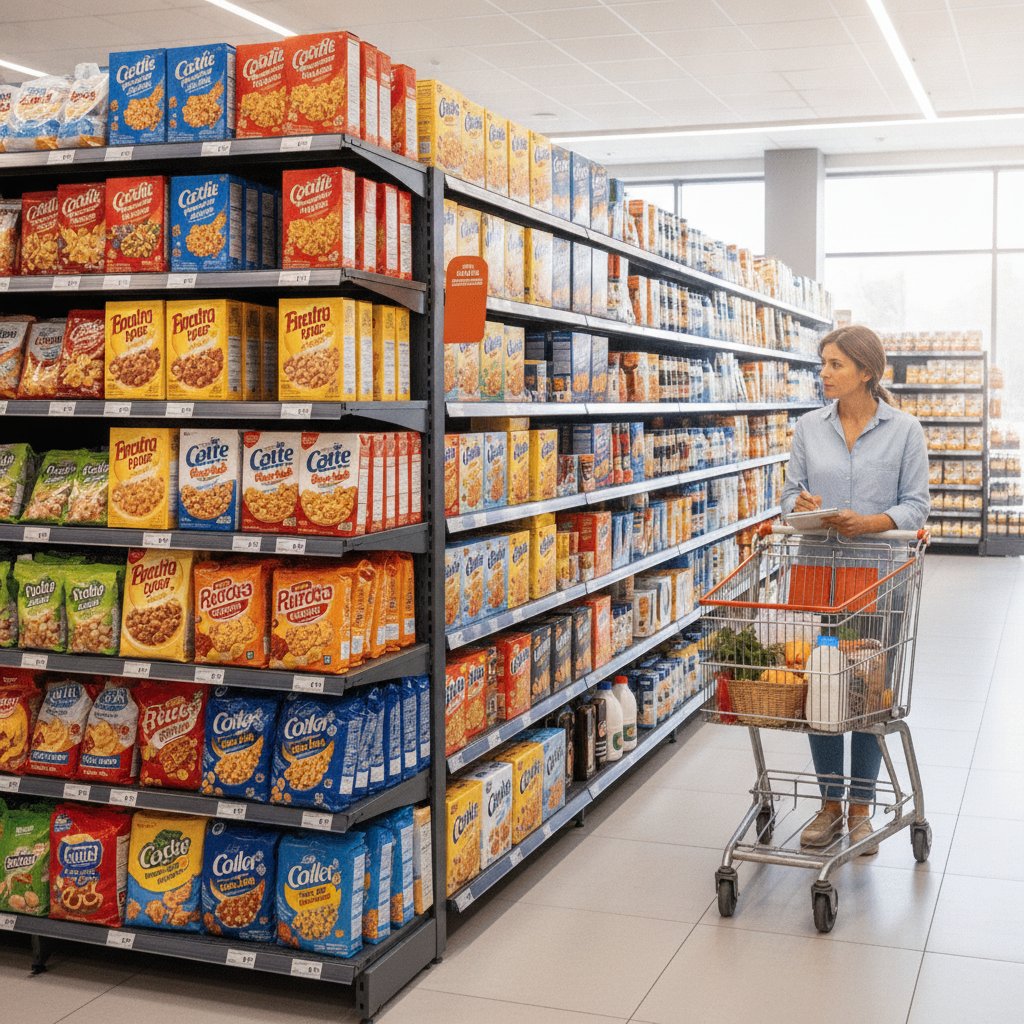
Grocery stores are designed environments, and nearly every inch of shelf space reflects a deliberate commercial decision. The positioning of products — which brands appear at eye level, which items anchor the ends of aisles, and which options get buried on the lowest shelves — follows a logic that has little to do with helping shoppers find the best value. Understanding how these placement strategies work gives shoppers a practical edge that compounds quietly over time.
The Business Logic Behind Prime Shelf Real Estate
Retailers charge manufacturers for premium shelf positions, and the most desirable spots carry the highest fees. Eye-level shelves — roughly between waist and shoulder height for an average adult — are considered the most valuable, followed by endcap displays at the end of each aisle. These placements aren't awarded on product quality or price competitiveness. They're purchased, which means the items most prominently displayed are often those with the largest marketing budgets, not necessarily the best value. Brands like Kellogg's, General Mills, and Procter & Gamble have long negotiated for these dominant positions across major chains.
Why Endcaps Create a False Impression of a Deal
Endcap displays — those freestanding product arrangements at the terminus of each aisle — are strongly associated in shoppers' minds with sales and discounts. Research consistently confirms that shoppers assume items on endcaps are marked down, even when no price reduction exists. Retailers and brands exploit this association deliberately. A product placed on an endcap with bold signage may be at its full regular price, while an equivalent or superior product sits mid-aisle at a lower cost with no promotional fanfare. The visual theater of an endcap does much of the persuasive work before a shopper even reads the tag.
How Eye-Level Placement Shapes Automatic Choices
The human tendency to default to whatever requires the least effort extends directly to grocery shopping. When a shopper scans a shelf, their gaze naturally settles in the middle range — the eye-level zone — and that's where most purchase decisions are made with minimal deliberation. Store-brand and lower-cost alternatives are disproportionately placed on bottom shelves or at the far ends of product ranges. At a store like Kroger or Albertsons, a name-brand cereal might occupy three facings at eye level while a comparable private-label version sits on the bottom shelf at roughly half the price, visible only to someone actively looking for it.
What Happens When Shoppers Scan the Entire Aisle
Shoppers who take the time to examine all shelf levels — including the bottom shelf and the section farthest from the aisle entrance — consistently find lower-priced alternatives that match or approach the quality of featured products. This behavior, sometimes called vertical scanning, applies across nearly every category: canned goods, condiments, cooking oils, breakfast foods, and cleaning products. The savings on any single item may appear modest, but the effect accumulates. A household that consciously scans full shelf ranges across four or five staple categories each week can realistically reduce its monthly grocery spend by a meaningful margin without changing what it eats.
The Monthly Savings Picture for an Average Household
The cumulative effect of bypassing endcap impulse purchases and choosing lower-shelf alternatives instead of eye-level brands builds steadily across a four-week shopping cycle. Across categories like pasta, cooking oil, canned tomatoes, breakfast cereal, and household staples, the difference between the eye-level brand and the lower-shelf equivalent typically ranges from twenty to forty percent per item. For a household shopping weekly, those per-item differences across even a handful of product categories add up to a noticeable reduction by the end of the month — without any change in meal planning, dietary habits, or shopping frequency.
Practical Steps for Rethinking How You Move Through a Store
The most effective adjustment is also the simplest: slow down and look at all three shelf levels before placing anything in the cart. Before reaching for the eye-level option, check the bottom shelf for store-brand or regional alternatives. On endcaps, verify the price tag before assuming a discount — compare it to the shelf price of the same item mid-aisle. Apps like Flipp or a store's own loyalty app can confirm whether an endcap price reflects a genuine markdown. When building a weekly list, note which staple categories you rely on most, and commit to scanning the full vertical range in those sections first. These habits require almost no extra time once they become routine.
As grocery retailers continue refining their store layouts with behavioral data and foot-traffic analytics, shelf placement strategies will only grow more sophisticated. Shoppers who treat the store layout as a neutral information environment — rather than a curated shopping guide — are best positioned to consistently capture the savings that placement-aware buying quietly delivers every month.
More Trending Articles
How Supermarket Deli Counter Pricing Compares to Pre-Packaged Equivalents and Which Categories Consistently Offer Better Value When You Buy by Weight
Jennifer Walsh
10/27/2026