How Mattress-in-a-Box Brands Use Trial Period Length and Return Logistics as Competitive Signals and What to Actually Compare Before You Order
Jennifer Walsh
10/18/2026
4 min read
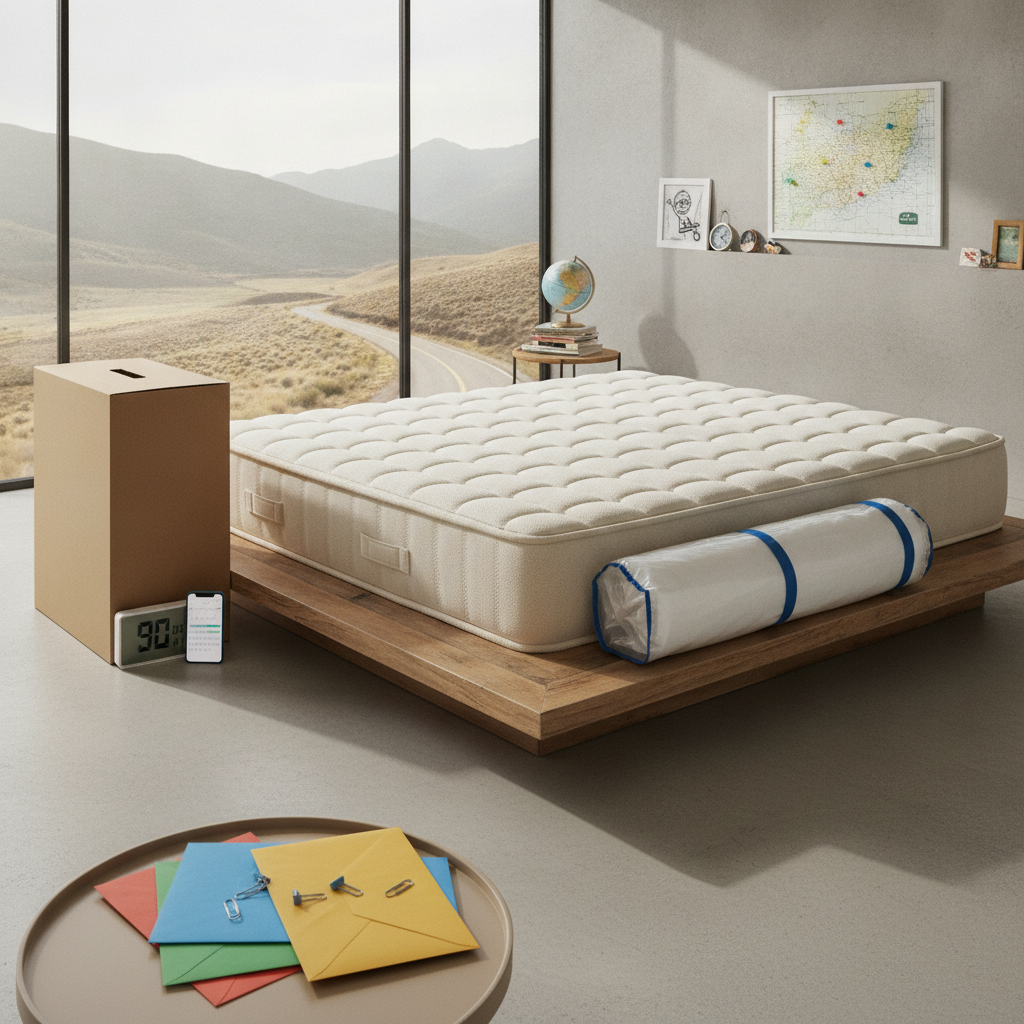
Trial period length has become one of the most visible numbers in mattress marketing — printed in bold on homepages, repeated in ads, and used as a primary reason to choose one brand over another. What started as a genuine customer-friendly policy has evolved into a competitive arms race where the headline number often obscures the more important details buried in the fine print. Understanding what those numbers actually signal, and what they don't, is the difference between a confident purchase and an expensive mistake.
Why Trial Lengths Became a Marketing Tool
When Casper launched its original 100-night trial in the mid-2010s, the number was chosen deliberately. It was long enough to feel generous but round enough to be memorable. Competitors noticed the effect immediately. Within a few years, brands like Saatva, Nectar, and Purple were advertising 365-night trials, effectively weaponizing the trial window as a trust signal. The logic was straightforward: a longer trial implies greater confidence in the product. In practice, the length of a trial tells a consumer very little about the quality of the mattress itself. It tells them much more about the brand's marketing strategy and its relationship with third-party pickup logistics partners.
What Return Logistics Actually Involve
Returning a mattress is not like returning a pair of shoes. Most brands that advertise "free returns" are working with local charity pickup networks or junk removal contractors rather than sending a truck from a central warehouse. When a customer initiates a return with a brand like Helix or Leesa, the mattress is typically donated or recycled through a regional third party. This arrangement works smoothly in dense urban areas with active donation networks but can break down entirely in rural zip codes where no charity partners operate. Some brands charge a fees in those cases, others simply deny the return is logistically possible — neither outcome matches the marketing promise.
The Gap Between Policy and Practice
A 365-night trial sounds significantly better than a 100-night trial on paper, but the meaningful comparison is what happens when a customer actually tries to use it. Brands vary considerably in how they handle the initiation process: some require a mandatory break-in period of 30 to 60 nights before a return can be requested, meaning a "365-night" trial is effectively a shorter window in practice. Others have customer service teams that strongly discourage returns through extended troubleshooting processes. Reading through verified customer reviews specifically about the return experience — not the mattress itself — reveals patterns that the official policy language doesn't capture.
The Factors That Actually Determine Comfort Fit
Trial windows exist because mattress comfort is genuinely subjective and body-dependent in ways that a five-minute showroom test cannot replicate. The relevant comparison points before ordering are firmness consistency across body weight ranges, edge support quality, heat retention based on cover materials, and motion transfer behavior for couples. Brands publish these attributes in varying levels of detail. Nectar tends to provide construction layer specifics, while some newer DTC brands list only general descriptors. Seeking out independent comparison sites that test mattresses under controlled conditions gives a clearer picture than brand-generated content, which exists primarily to reduce purchase hesitation rather than inform objective comparison.
Reading the Fine Print Before the Clock Starts
Before you place an order, read the trial terms the same way you'd read a lease. Check whether the trial clock starts at order date or delivery date — the difference can be several weeks. Confirm whether there's a mandatory minimum trial period before returns are accepted, and whether your zip code falls within the service area for free pickup. Look specifically for language about "comfort exchanges" versus full refunds, since some brands will push a firmness swap instead of processing a return. Check whether the brand's return policy has changed in the past year, because several companies — including some well-known ones — have quietly reduced their trial windows or added restocking fees after rapid growth phases created unsustainable return volumes.
Comparing Brands on Terms That Matter
When evaluating brands side by side, the most useful framework prioritizes a few specific variables over trial length alone. First, look at the warranty duration and what it actually covers — a ten-year warranty that excludes body impressions under a certain depth is nearly meaningless. Second, assess whether the brand has a physical retail presence or authorized showroom partners, since being able to test the mattress before buying removes much of the trial period's value entirely. Third, check whether the brand operates its own customer service or routes returns through a third-party fulfillment company, which often adds friction. Brands like Saatva with showroom networks and direct-service models tend to deliver more predictable experiences than pure DTC operations with no physical touchpoint.
Trial period length is a legitimate feature worth considering, but treating it as the primary differentiator between mattress brands is precisely what the marketing is designed to encourage. The more useful comparison is between return logistics clarity, warranty depth, construction transparency, and the actual track record of customer service during the return process. A 100-night trial from a brand with straightforward pickup logistics and responsive support is worth considerably more than a 365-night trial from a company whose return process generates consistent complaints. The number on the homepage is a starting point, not a conclusion.
More Trending Articles
How Supermarket Deli Counter Pricing Compares to Pre-Packaged Equivalents and Which Categories Consistently Offer Better Value When You Buy by Weight
Jennifer Walsh
10/27/2026