How Noise-Cancelling Earbuds With Transparency Mode Are Replacing Multiple Travel Accessories for Frequent Flyers
Chris Martinez
07/18/2026
5 min read
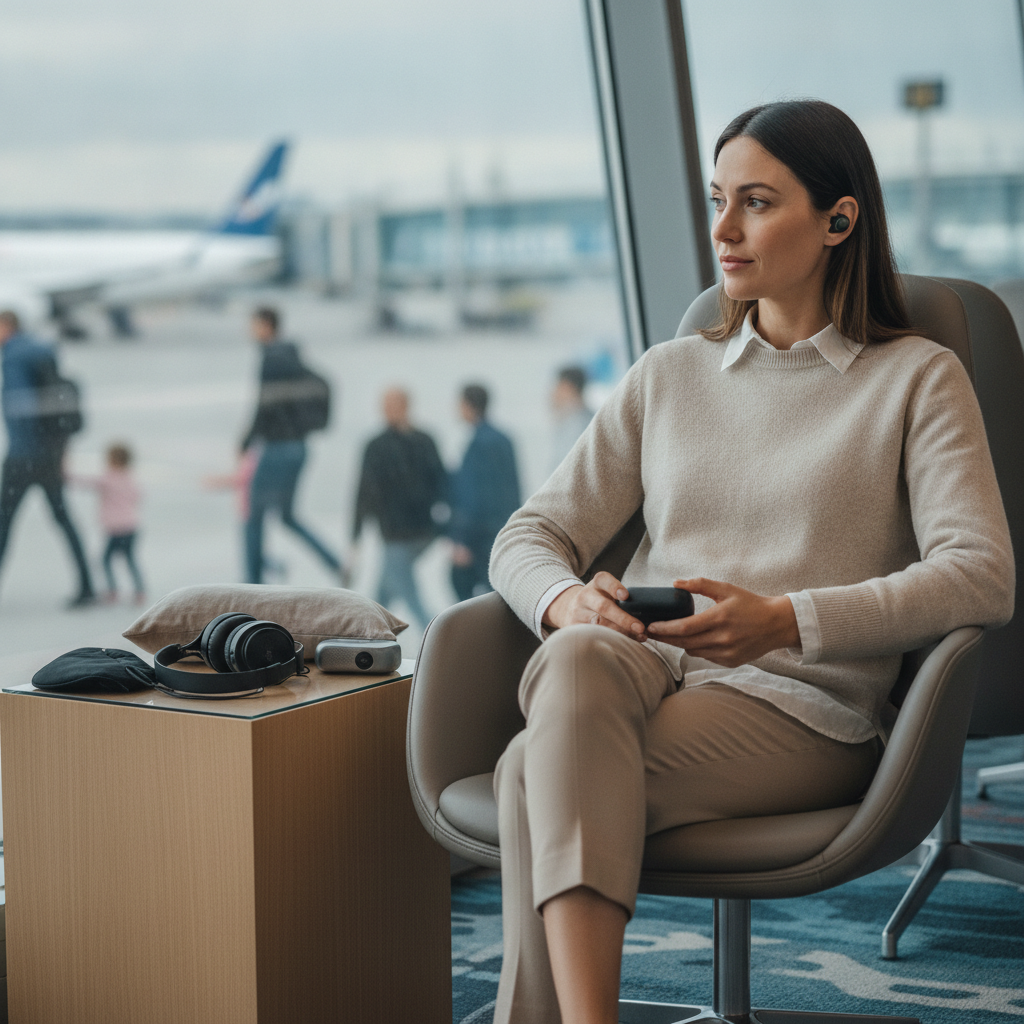
Frequent air travel has always demanded a certain kind of resourcefulness — the ability to block out a crying infant in seat 14C while still catching a gate change announcement overhead. For decades, that demanded carrying several separate devices: bulky over-ear headphones, a separate set of earbuds for calls, perhaps a white noise machine for hotel rooms. A single category of compact audio hardware is quietly making all of those redundant, and the shift is happening faster than most travelers have noticed.
The Convergence of Noise Control and Awareness
Modern noise-cancelling earbuds don't simply block sound — they offer a spectrum of acoustic control that was unimaginable even five years ago. Transparency mode, a feature now standard on flagship earbuds from Apple, Sony, and Bose, uses onboard microphones to pipe in ambient sound in real time, allowing wearers to hear their environment as clearly as if nothing were in their ears. This seemingly simple toggle eliminates the need to remove earbuds every time a flight attendant approaches, a passport officer calls a name, or a terminal announcement echoes through a busy concourse. The result is a seamless audio experience that adapts to context rather than forcing the traveler to adapt to it.
The Accessories That Are Quietly Disappearing From Carry-Ons
Travel neck pillows with built-in speakers, portable white noise machines, and airline headphone adapters are among the items losing ground to a single pair of well-designed earbuds. White noise functionality, once a niche hardware product sold in airport shops, is now a software feature available through apps like Calm or natively within earbud companion apps. Sony's WF-1000XM5 and Apple's AirPods Pro, for example, include ambient sound modes that double effectively as white noise sources for hotel sleep. The airplane audio adapter — that awkward dual-prong dongle — is also disappearing as airlines increasingly shift to Bluetooth-compatible in-flight systems, and where they haven't, travelers have found that personal content on a phone paired to earbuds simply replaces the seatback screen.
Adaptive Sound Profiles and the Smart Earbud Ecosystem
What separates current-generation earbuds from their predecessors isn't just audio quality — it's intelligence. Many models now detect when a user is speaking and automatically lower volume or shift to transparency mode, then return to noise cancellation when the conversation ends. Some integrate with smartphone health apps to monitor heart rate or detect falls, expanding their utility beyond audio entirely. The ecosystem matters too: earbuds paired with an iPhone or Samsung Galaxy phone can trigger automatic pausing when removed from the ear, answer calls with a voice command, and switch seamlessly between a phone and a laptop during layovers. This level of integration reduces the need for additional communication accessories that travelers once packed as backups.
The Physical Footprint Advantage for Carry-On Packing
Beyond functionality, size tells much of the story. A pair of premium over-ear noise-cancelling headphones — the Bose QuietComfort series being a well-known example — requires a dedicated case roughly the size of a hardcover book. Current earbuds with equivalent or superior noise cancellation fit in a charging case smaller than a matchbox. For travelers managing strict carry-on allowances on budget airlines, or those attempting a genuine one-bag philosophy through cities like Amsterdam or Tokyo, that spatial economy is significant. The weight savings compound when a single device replaces three: the earbuds handle in-flight entertainment, sleep noise masking, hands-free calls, and even translation assistance through apps like Google Translate's conversation mode.
Battery Life, Charging Cases, and the Long-Haul Reality
The early criticism of earbuds — that their battery life couldn't sustain a long-haul flight — has eroded considerably. Models released in recent years routinely offer six to eight hours of playback on a single charge, with cases providing an additional twenty-four to thirty-six hours of total power. A quick fifteen-minute charge during a layover typically restores several hours of use, and USB-C standardization means travelers no longer need a separate charging cable for their earbuds. On ultra-long routes like Singapore to New York or London to Sydney, the case's reserve capacity handles the duration comfortably, often without needing a wall outlet at all. For the frequent flyer counting cables in their bag, consolidating to a single USB-C cord for both phone and earbuds is a practical, underappreciated simplification.
Making the Switch: What to Prioritize When Choosing a Pair
If you're evaluating whether a single pair of earbuds can genuinely replace the audio accessories currently spread across your carry-on, a few specifications deserve close attention. Noise cancellation depth varies significantly between models — earbuds designed for commuters may not handle the sustained low-frequency drone of a long-haul aircraft cabin as effectively as those tuned specifically for that environment. Transparency mode quality also differs; some implementations sound slightly artificial or hollow, which becomes fatiguing over hours. Ear tip fit is critical, since passive isolation from a well-fitted tip does much of the noise-blocking work before active cancellation even engages. You should also check whether the companion app offers granular control over transparency levels — the ability to dial in exactly how much ambient sound passes through is what makes the technology genuinely useful across airports, trains, and hotel lobbies rather than just on the plane itself.
The evolution of noise-cancelling earbuds with transparency mode reflects a broader pattern in travel technology: tools that once served a single purpose are being replaced by compact, intelligent devices that handle many tasks simultaneously. For frequent flyers who have spent years managing the weight and bulk of a purpose-built accessory kit, the shift represents a genuine simplification — not a compromise, but a consolidation driven by hardware that has matured enough to earn the trust of even demanding travelers.
More Trending Articles
How Supermarket Deli Counter Pricing Compares to Pre-Packaged Equivalents and Which Categories Consistently Offer Better Value When You Buy by Weight
Jennifer Walsh
10/27/2026