How Noise-Cancelling Headphone Apps with Adaptive Sound Profiles Are Changing the Long-Haul Flight Experience
Chris Martinez
07/15/2026
5 min read
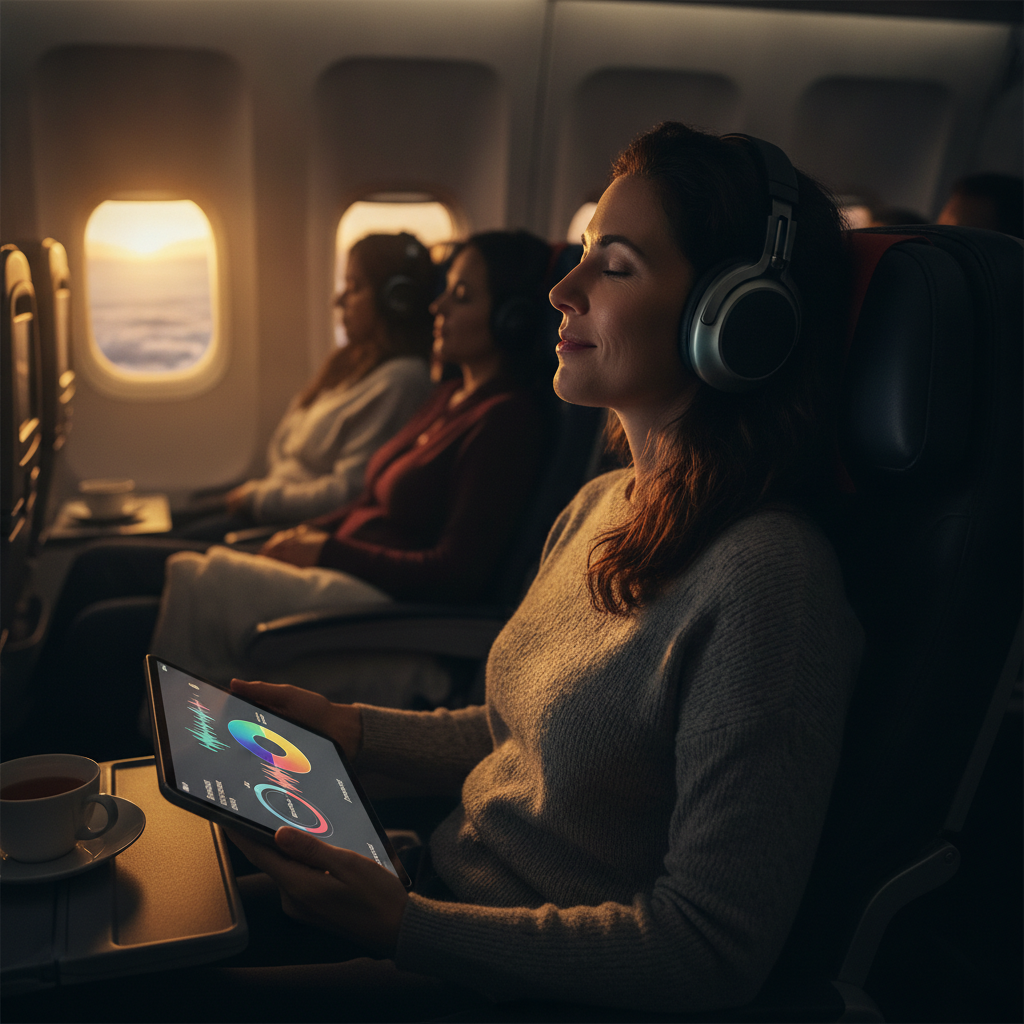
The cabin of a long-haul aircraft is one of modern travel's most psychologically demanding environments. The relentless drone of jet engines, the ambient clatter of service carts, the restless movement of hundreds of strangers compressed into aluminum and recycled air — it accumulates over hours in ways that feel both invisible and exhausting. For decades, the only real antidote was resignation, or perhaps a modest pair of foam earplugs. What has quietly shifted, however, is something far more sophisticated: the emergence of headphone applications equipped with adaptive sound profiles that can read, respond to, and reshape the acoustic world around a traveler in near real time.
The Science Behind Adaptive Acoustic Control
Adaptive sound profiles are built on a deceptively elegant principle — that different environments demand different acoustic responses. Traditional noise-cancelling technology worked by generating an opposing sound wave to neutralize ambient noise, a fixed and largely passive process. Modern headphone applications, by contrast, use onboard microphones and machine learning algorithms to continuously sample surrounding audio, classify what they're hearing, and adjust cancellation curves accordingly. The result is an experience that doesn't just block sound but actively interprets it, distinguishing between the low-frequency rumble of a turbofan engine and the higher-frequency hiss of cabin pressurization with increasing precision.
What the Leading Apps Are Actually Doing
Sony's Headphones Connect app, Bose Music, and the companion software for Apple's AirPods Pro have each moved well beyond simple on/off noise-cancellation toggles. These platforms now offer what might be called kankyo tekiou — environmental adaptation — a Japanese design philosophy that prizes seamless responsiveness to context. Sony's Adaptive Sound Control, for instance, detects physical activity states like sitting, walking, or traveling, and shifts audio transparency levels to match. Bose's CustomTune feature physically measures each user's ear canal geometry on every wear, calibrating sound output to individual anatomy. These are not gimmicks; they represent a meaningful convergence of biometric awareness and acoustic engineering.
The Psychology of Sound Fatigue on Long Flights
There's a reason long-haul passengers arrive feeling hollowed out even when they've slept through most of the journey. Chronic low-level noise exposure triggers the body's stress response at a subconscious level, elevating cortisol and keeping the nervous system in a state of low-grade vigilance. Audiologists refer to this as noise fatigue — a cumulative depletion that compounds over time. Adaptive sound profiles address this not just through cancellation but through active relaxation features: gentle pink noise layers, binaural tones, and breathable soundscapes that shift dynamically to prevent the ear from habituating to a single static audio environment, which itself can become a source of subtle strain.
Transparency Modes and the Social Dimension of Travel
One of the less-discussed advantages of adaptive audio technology is its ability to restore social presence on demand. Transparency mode — a feature now standard in premium headphones from Jabra, Apple, and Sony — blends ambient sound back into the listening environment so that a traveler can hear a flight attendant, a seatmate, or a departure announcement without removing the headphones entirely. This creates a new kind of social fluency in transit spaces, a middle state between full immersion and full exposure that feels natural rather than awkward. It's a small but meaningful shift in how people relate to shared public space, particularly in the compressed intimacy of aircraft cabins.
Sleep and Recovery as In-Flight Outcomes
The premium long-haul experience has always marketed sleep as its central promise — lie-flat beds, dimmed lighting, warm blankets offered with ritual care. Adaptive audio technology is extending that promise into economy and premium economy cabins by making genuine sleep architecture more achievable without a flat seat. Apps like Calm and Endel now integrate directly with headphone platforms to deliver algorithmically generated sleep soundscapes that adjust in response to detected noise fluctuations. When cabin volume spikes during turbulence or a service pass, the app responds by deepening the masking layer. When the cabin quiets, it recedes. The effect, for many travelers, is the closest approximation to a controlled sleep environment that economy travel has ever offered.
The Hardware-Software Relationship Reshaping Premium Audio
What makes this moment distinct is not the headphones themselves — noise cancellation has existed for years — but the maturing of the software layer that governs them. Firmware updates now routinely add new environmental detection categories, refine cancellation algorithms, and introduce features that didn't exist at the time of purchase. A pair of Sony WH-1000XM5 headphones bought two years ago performs meaningfully differently today because the underlying app has continued to evolve. This subscription-era dynamic, where hardware improves through software rather than replacement, is changing consumer expectations around value and longevity in travel tech — and compelling manufacturers to compete on acoustic intelligence rather than specifications alone.
Bringing This Into Your Own Travel Routine
If you travel regularly on routes exceeding six hours, the calculus around audio gear is worth reconsidering with fresh eyes. The gap between a standard pair of wireless headphones and a genuinely adaptive system is no longer marginal — it's the difference between enduring a flight and moving through it with something approaching ease. Start by exploring the companion app for whatever headphones you already own; many travelers never open them and miss features that are already available. If you're evaluating new options, prioritize platforms with active development histories rather than static feature sets. Pay attention to how a system handles transitions — from silence to noise and back — because that responsiveness is where the real quality difference lives. The cabin hasn't changed. The engine still roars. But the space you inhabit inside that roar has become, for the first time, genuinely negotiable.
More Trending Articles
How Supermarket Deli Counter Pricing Compares to Pre-Packaged Equivalents and Which Categories Consistently Offer Better Value When You Buy by Weight
Jennifer Walsh
10/27/2026