What First-Time Visitors to Oaxaca Consistently Underestimate About Navigating Market Timing, Mezcal Pricing, and Village Day Trips Without a Tour Group
Sarah Mitchell
10/11/2026
5 min read
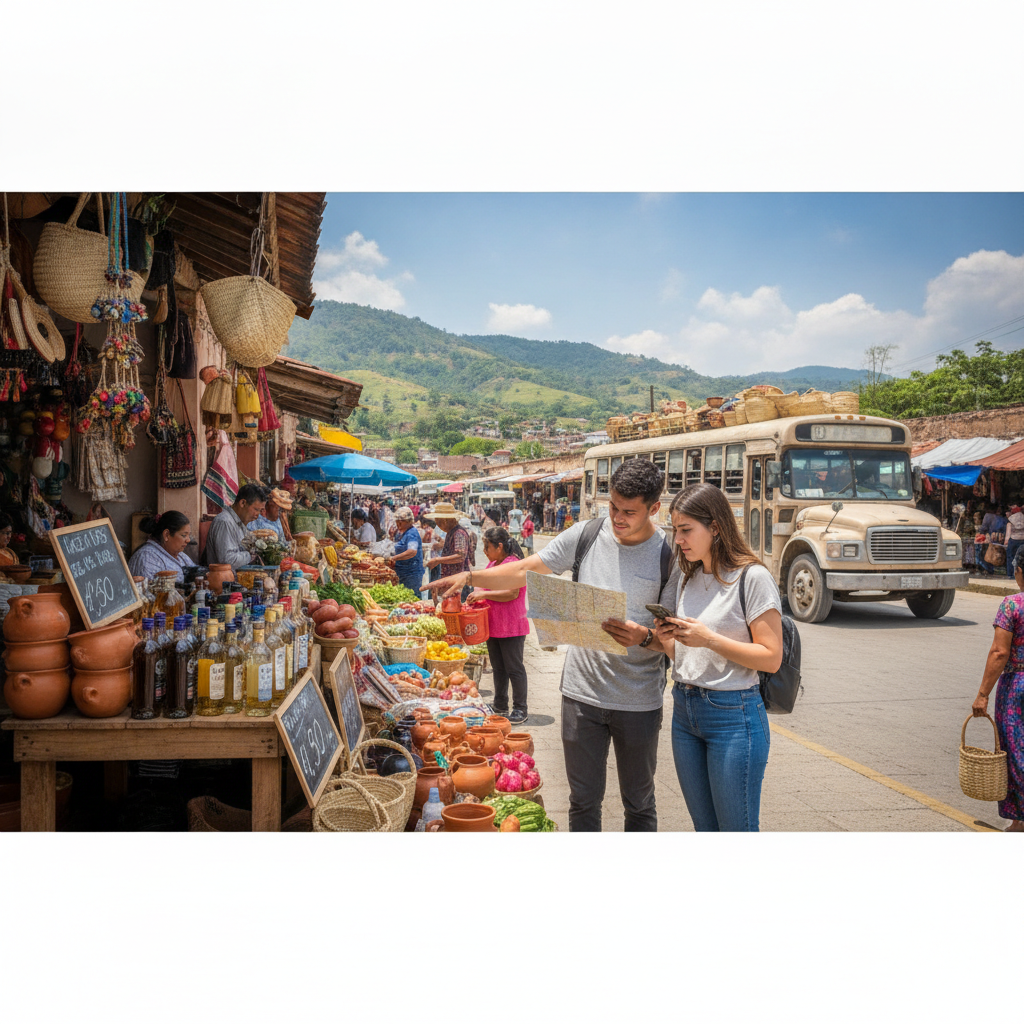
Oaxaca rewards patience more than planning, and most first-time visitors arrive with the planning part handled and the patience part entirely unconsidered. The state's capital is one of Mexico's most culturally layered destinations — a place where the mercado (market) operates on its own internal logic, where mezcal pricing reflects far more than supply and demand, and where the surrounding villages function as independent worlds that don't necessarily orient themselves toward casual visitors. Understanding how these systems actually work, rather than how guidebook summaries suggest they do, makes the difference between a trip that skims the surface and one that settles into something genuinely memorable.
The Market as a Living Schedule
The Mercado Benito Juárez and its sprawling neighbor, Mercado 20 de Noviembre, sit at the heart of Oaxaca City's daily rhythm, but they don't behave the same way across every hour or every day of the week. Early mornings — before nine, ideally before eight — belong to local buyers: women selecting chiles negros and pasillas for the week's mole, vendors restocking their own kitchen supplies before the tourist foot traffic begins. The produce is freshest then, the vendors less hurried, and the prices less adjusted for the presence of cameras and foreign accents. Most first-time visitors arrive mid-morning, already caffeinated, already slightly overwhelmed, and walk into a market that has already shifted into a different gear. The tlayuda stalls inside 20 de Noviembre are genuinely worth visiting at any hour, but watching the market move through its early rhythms is an experience entirely of its own.
Saturday remains the anchoring market day for the broader region, particularly at Tlacolula de Matamoros, a town about forty minutes from the city by colectivo (a shared van or taxi operating on a fixed route). Tlacolula's Sunday market — one of the oldest continuously operating tianguis (open-air markets) in the state — draws vendors from across the Central Valleys, including weavers from Teotitlán del Valle and pottery sellers from Atzompa. Arriving after ten means navigating a market that's already reached full density. Arriving at eight means watching it assemble, which is often more interesting than the market itself.
What Mezcal Pricing Actually Signals
Mezcal has undergone a sharp international profile shift over the past decade, and that shift has had complicated effects on how it's priced and presented to visitors in Oaxaca. The bottles available in airport shops and high-end mezcalerías (mezcal bars) in the city's Jalatlaco neighborhood often represent the export market more than the local one — brands built for international shelf presence, priced accordingly, and not necessarily reflecting what experienced Oaxacan drinkers would choose. This isn't dishonesty; it's simply a different product category operating under different economics.
The more instructive experience happens at smaller palenques (traditional mezcal distilleries) in villages like San Marcos Tlapazola or Santa Catarina Minas, where mezcal is sold by the liter in repurposed bottles, priced in a range that reflects actual production costs rather than branding overhead. Tobaziche, tepeztate, and tobalá are all agave varieties with meaningfully different flavor profiles, and tasting them at the source — poured by the family that made them — costs a fraction of what a curated flight runs at a city bar. The mezcal itself isn't necessarily superior in either setting; the difference is context, transparency, and the kind of conversation that tends to happen when you're standing in a dirt-floored distillery rather than a designed tasting room.
For visitors who want a middle path, the shop In Situ on Calle Murguía in Oaxaca City carries an unusually broad selection of small-production mezcals, with staff who explain regional distinctions without pushing toward the most expensive bottles. It's one of the few retail spaces in the city that stocks mezcal primarily for people who want to understand it.
Village Day Trips Without a Tour Group
The circuit of villages surrounding Oaxaca City — Monte Albán, Mitla, Hierve el Agua, Teotitlán del Valle — appears on virtually every itinerary, usually packaged into a single rushed day by organized tour. Doing these independently changes the experience substantially, though it requires understanding that the colectivo system, not the tourist shuttle, is the actual infrastructure of regional movement. Colectivos to most Central Valley destinations leave from specific points in and around the second-class bus terminal on Calle Trujano, with departures frequent enough that a missed one rarely costs more than twenty minutes.
The more underestimated issue is village timing. Hierve el Agua, the mineral spring formation east of Mitla, is genuinely stunning before ten in the morning and genuinely crowded after eleven — not because of tour groups specifically, but because of the combined effect of every independently organized visitor arriving around the same time. Monte Albán, the Zapotec archaeological site above the city, shifts dramatically in atmosphere depending on the angle of the sun: late afternoon light does something to the stones that midday cannot replicate, and the crowd thins considerably after three. Getting there requires either a shuttle from the city (the most straightforward option) or a taxi negotiated at a fixed rate, which most drivers are accustomed to discussing.
Teotitlán del Valle deserves more time than most visitors allocate. The village is the center of Zapotec weaving tradition in the region, and the tapetes (rugs and textiles) sold there range from genuinely handwoven pieces using natural dyes — cochineal, indigo, marigold — to machine-assisted work sold under similar descriptions. Learning the difference takes a few conversations and a willingness to visit several family workshops before buying anything. The village cooperative near the market entrance can explain the production process, and that conversation tends to calibrate expectations for everything that follows.
Reading the Trip More Slowly
Oaxaca is not a destination that yields its texture to visitors in a hurry, and that's perhaps the most consistent thing first-time travelers underestimate. The market makes more sense after two visits. The mezcal means more after a distillery and a city bar. The villages feel more connected once the colectivo system becomes familiar rather than intimidating. What looks like a planning problem — how to fit more in — is usually a pacing problem: the instinct to optimize a finite trip against a list of sites, when the actual value accumulates in the slower intervals between them. The broad truth about Oaxaca is that it was built around rhythms that don't accelerate for visitors, and the best approach is usually to stop trying to make them.
More Trending Articles
How Supermarket Deli Counter Pricing Compares to Pre-Packaged Equivalents and Which Categories Consistently Offer Better Value When You Buy by Weight
Jennifer Walsh
10/27/2026