How Traveling the Pelion Peninsula by Local Bus Instead of Rental Car Changes the Villages You Reach and What You Actually Pay
David Park
10/14/2026
5 min read
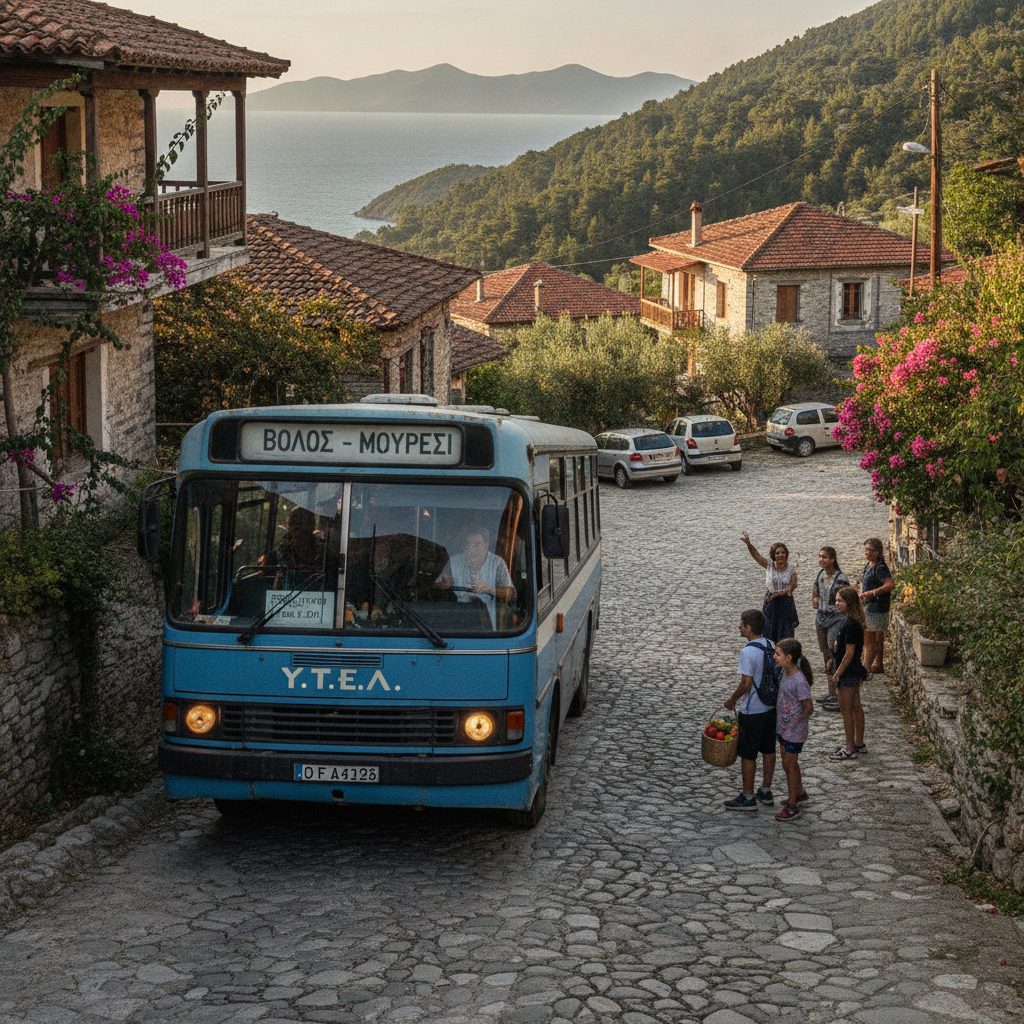
Few corners of Greece reward slow travel as generously as the Pelion Peninsula. Draped across a mountainous arm of central Greece, this forested headland offers stone-paved paths, chestnut groves, and villages so intact they seem untouched by the last several decades. Most visitors rent a car at Volos and drive the switchback roads on their own schedule. But travelers who board the KTEL Magnesia buses instead discover something different — not just a cheaper trip, but a fundamentally different set of villages, encounters, and daily rhythms.
The Route Network Shapes the Experience From the Start
KTEL Magnesia, the regional bus operator serving Pelion, runs routes that connect Volos to a rotating set of villages across the peninsula. The network isn't exhaustive, but the stops it does serve tend to be the most authentic — Zagora, Tsagarada, Mouresi, Milies. These are working communities where the bus is still a practical lifeline for residents, not a tourist novelty. Arriving by bus means stepping off into the village square rather than a car park on the edge of town, which changes everything about how the first hour of a visit feels.
What You Actually Pay Compared to a Rental Car
A mid-range rental car from Volos, including fuel for the steep mountain roads and parking where it's available, typically runs to a meaningful daily sum — often comparable to one or two nights of budget accommodation in the villages themselves. Bus fares between Volos and Tsagarada, for instance, cost a small fraction of that. The savings compound quickly across a multi-day itinerary. Travelers who commit to bus-based movement through Pelion routinely find that the transport portion of their budget drops dramatically, freeing money for the kind of local taverna meals or overnight stays in traditional guesthouses that define a quality trip.
Villages the Bus Reaches That Rental Car Tourists Often Skip
Because most drivers plan routes around the most photographed viewpoints, certain quieter villages see far fewer visitors. Mouresi, sitting above Damouchari's small harbor, is a consistent bus stop and a far calmer alternative to Makrinitsa, which gets crowded with day-trippers. Milies, on the southern route, has a preserved railway station from the narrow-gauge Pelion Railway and a plateia lined with mulberry trees — but because it's slightly out of the way for drivers focused on the sea, it sees only a trickle of visitors. Bus travelers arrive there by default and often find it one of the quietest, most rewarding stops on the peninsula.
The Timing of Buses Structures the Day Differently
Bus schedules on Pelion don't offer the frequency of urban transit. A village might have two or three departures per day, which means travelers need to plan around arrival and departure windows. This constraint sounds inconvenient but functions as a built-in slow travel mechanism. With two or three hours anchored in a village before the next bus, there's time to sit with a coffee, walk to a nearby path, and actually absorb a place rather than photograph it from the car window and move on. The enforced pace is one of the less obvious benefits of leaving the rental car behind.
Where the Bus Doesn't Go and How to Handle It
Some coastal areas — particularly the beach settlements along the eastern Aegean coast — are either not served or only served seasonally. Mylopotamos, Fakistra, and the beaches beneath Damouchari require walking from the nearest bus stop or, in some cases, a short taxi ride from Tsagarada. Apps like Rome2rio can help map the combinations in advance, and local taxi drivers are generally familiar with running tourists the last few kilometers to a beach trailhead. The key is treating bus travel as the trunk of the itinerary and short walks or occasional taxis as the branches — not expecting the network to do everything.
Accommodation Strategy Works Better Around Bus Villages
Staying in a village that sits on a bus route rather than choosing accommodation for its view alone reshapes the entire trip structure. Tsagarada and Zagora both have guesthouses ranging from simple rooms to restored stone mansions, and both are regular KTEL stops. Booking accommodation in these places means the logistical math stays simple — no car, no fuel, no parking anxiety on roads that occasionally require passing another vehicle with inches to spare. Platforms like Booking.com surface options in these villages readily, and direct contact with smaller guesthouses often yields better rates than the listed online price.
What the Locals Notice About Bus Travelers
This is harder to quantify but worth acknowledging. Arriving by bus in a Greek mountain village signals something to residents. It suggests a traveler who isn't in a hurry, who isn't trying to compress the peninsula into a day trip, and who is operating at something closer to local pace. The interactions that follow tend to reflect this. Taverna owners are more likely to make recommendations. Shop keepers engage differently. It isn't a romantic exaggeration to say that the mode of transport affects the quality of human exchange — it simply does, and Pelion is small enough that the difference is noticeable.
Building a Realistic Multi-Day Bus Itinerary
A workable three-day structure starts with a night in Volos to orient, then a morning bus to Tsagarada for one or two nights, followed by an afternoon connection to Zagora, and a final bus back to Volos via Milies. This loop captures distinct landscape zones — the dense chestnut forest of the north, the apple orchards around Zagora, the dramatic eastern coast views from Tsagarada — without requiring a car at any point. Gaps in the schedule are easily filled with the walking paths that connect villages, some of which follow the original kalderimi stone trails that predate modern roads entirely.
The Pelion Peninsula rewards the traveler who resists the instinct to control every variable. Handing the route over to KTEL, accepting a schedule that isn't entirely flexible, and arriving on foot into a village square rather than a parking area — these small surrenders return something that the rental car itinerary rarely delivers: the quiet feeling of actually being somewhere, rather than passing through it.
More Trending Articles
How Supermarket Deli Counter Pricing Compares to Pre-Packaged Equivalents and Which Categories Consistently Offer Better Value When You Buy by Weight
Jennifer Walsh
10/27/2026