How Smart Luggage Trackers Like Apple AirTags and Tile Compare for International Travel Scenarios
Jennifer Walsh
07/12/2026
5 min read
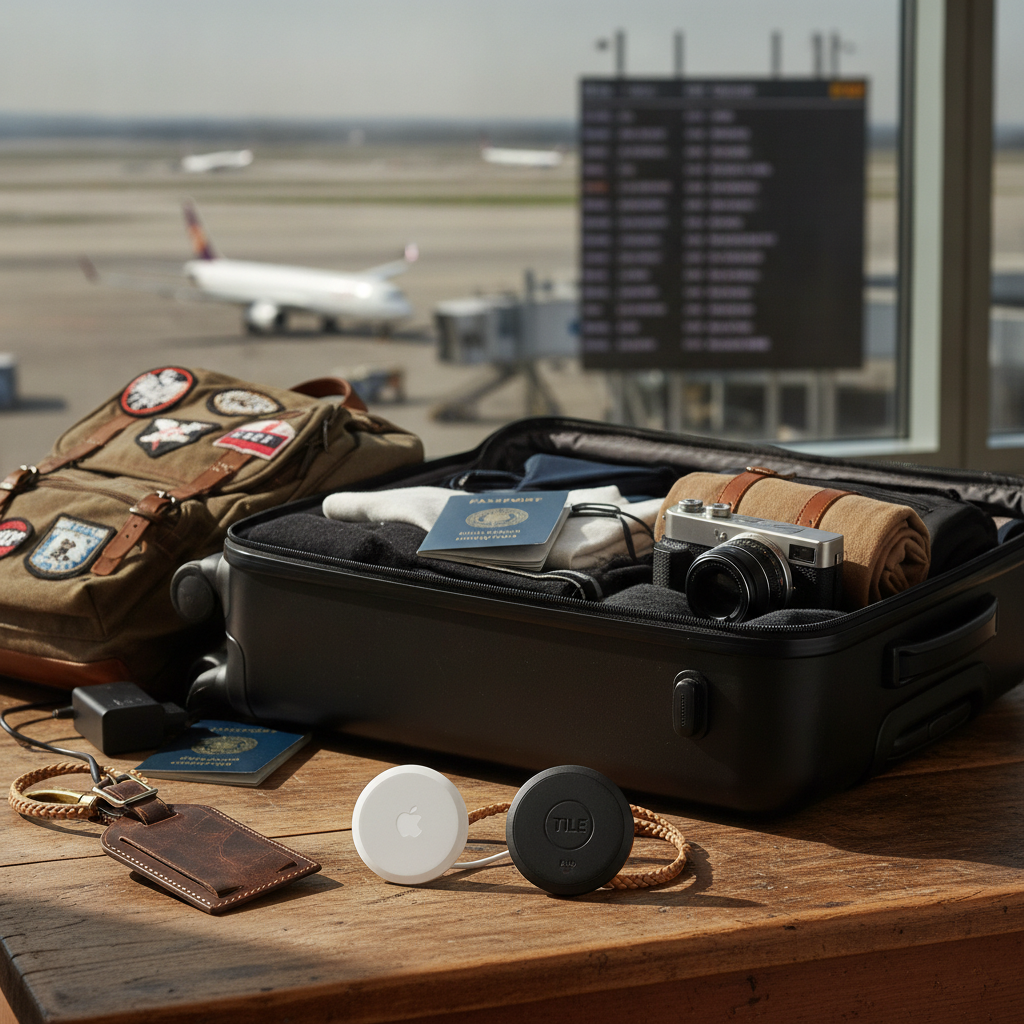
Losing a bag mid-journey is one of the most frustrating things that can happen when you're traveling internationally — and smart luggage trackers have become a genuine solution rather than just a novelty gadget. Apple AirTags and Tile are the two names that dominate most conversations on this topic, and each brings a distinct approach to keeping tabs on your belongings across borders. Knowing which one fits your travel style can save you serious stress at baggage claim.
Understanding How Each Tracker Actually Works
Apple AirTags rely on Apple's Find My network, which means they ping off any nearby Apple device in the world — silently and anonymously — to update your bag's location. Tile uses its own network of opted-in Tile users to do something similar. The critical difference is scale. Apple's network is enormous because it taps into hundreds of millions of iPhones and iPads already in use globally. Tile's network is solid in the United States but thinner in many international destinations, particularly in rural or less-traveled regions.
The Coverage Question in International Destinations
When your bag is sitting in a connecting hub like Frankfurt Airport or Changi in Singapore, the density of Apple device users nearby makes AirTags surprisingly reliable. Tile can still perform well in major cities across Europe, Canada, and Australia, but the network gaps become more noticeable the further you travel from urban centers. If your itinerary takes you to smaller towns in Southeast Asia, South America, or Eastern Europe, AirTags statistically have a better chance of returning an updated location simply because iPhones are everywhere.
Platform Loyalty and Who Can Actually Use These
This is where things get practical in a way that often gets overlooked. AirTags only work with iPhones. If you carry an Android device, you simply cannot use them effectively — you won't get the precision finding features, and you'll have no native app support at all. Tile, by contrast, works across both iOS and Android, making it the more inclusive option for mixed-device households or travelers who prefer Android phones. For families where one person has an iPhone and another has a Samsung, Tile keeps everyone on the same tracking page.
Battery Life and Replacement on the Road
Both devices use replaceable CR2032 coin cell batteries, which are widely available internationally — you'll find them in pharmacies and electronics shops from Tokyo to Buenos Aires. AirTags are rated for roughly a year of battery life under typical use, while Tile's Mate and Pro models offer similar longevity. The reassuring part is that neither requires charging via cable, which removes one point of failure from your travel tech setup. When the battery gets low, both devices alert you through their respective apps well in advance.
Precision Finding Versus Basic Location Updates
Apple's Ultra Wideband technology, built into AirTags and compatible iPhones, allows for what Apple calls Precision Finding — the ability to guide you directionally toward a tracker within a close range using haptic feedback and on-screen arrows. This is genuinely useful when your bag is somewhere inside a large airport terminal. Tile relies on Bluetooth signal strength to estimate proximity, which is less exact but still functional. If you've ever played the hot-and-cold game with a missing item, Tile's experience is a more analog version of what AirTags do with more precision.
Airline Policies and Tracker Placement Tips
Most major airlines now formally allow luggage trackers in checked bags, and carriers like Delta and Lufthansa have updated their policies to reflect this. Placing your tracker inside a zipped inner pocket rather than in an outside compartment reduces the chance it gets spotted and removed. Some travelers add a second tracker to a carry-on as a backup for checked luggage documentation. Using a slim Tile Sticker or an AirTag inside a compact luggage tag holder keeps the profile low without sacrificing signal quality.
Privacy Considerations When Crossing Borders
AirTags include an anti-stalking feature that alerts non-owners when an unknown AirTag has been traveling with them — a thoughtful safeguard that has also created some friction for travelers who share bags temporarily. If you lend your suitcase to a travel companion using a different Apple ID, they may receive an unwanted alert. Tile handles this differently, with quieter alerts and more user-controlled settings. For international travelers moving bags between multiple people or tour groups, understanding these privacy mechanics ahead of time prevents unnecessary confusion at the border.
Cost and Practical Value Over Multiple Trips
AirTags retail at a lower per-unit price than many Tile models, especially when purchased in a four-pack, making them appealing for travelers who want to tag multiple bags without significant expense. Tile offers a subscription tier called Tile Premium that unlocks features like location history and smart alerts, adding an ongoing cost that AirTags avoid entirely. Over the course of several international trips, the total cost of ownership is worth factoring in alongside the initial price tag — not just what you pay at checkout, but what you're committing to over time.
Smart luggage trackers have moved well past the early-adopter phase and into something most frequent international travelers consider standard kit. AirTags deliver superior network coverage and precision tools for iPhone users, while Tile earns its place as the more flexible, platform-agnostic option for mixed-device households or Android travelers. Choosing between them comes down less to quality and more to your device ecosystem, your destinations, and how you prefer to manage the tools in your travel tech stack. Either way, tagging your bags before an international trip is one of the simplest and most effective ways to protect your peace of mind from departure to arrival.
More Trending Articles
How Supermarket Deli Counter Pricing Compares to Pre-Packaged Equivalents and Which Categories Consistently Offer Better Value When You Buy by Weight
Jennifer Walsh
10/27/2026