How Solar-Charging Backpacks With Integrated USB-C Pass-Through Are Performing in Real Travel Conditions Compared to Manufacturer Output Claims
Marcus Chen
10/10/2026
5 min read
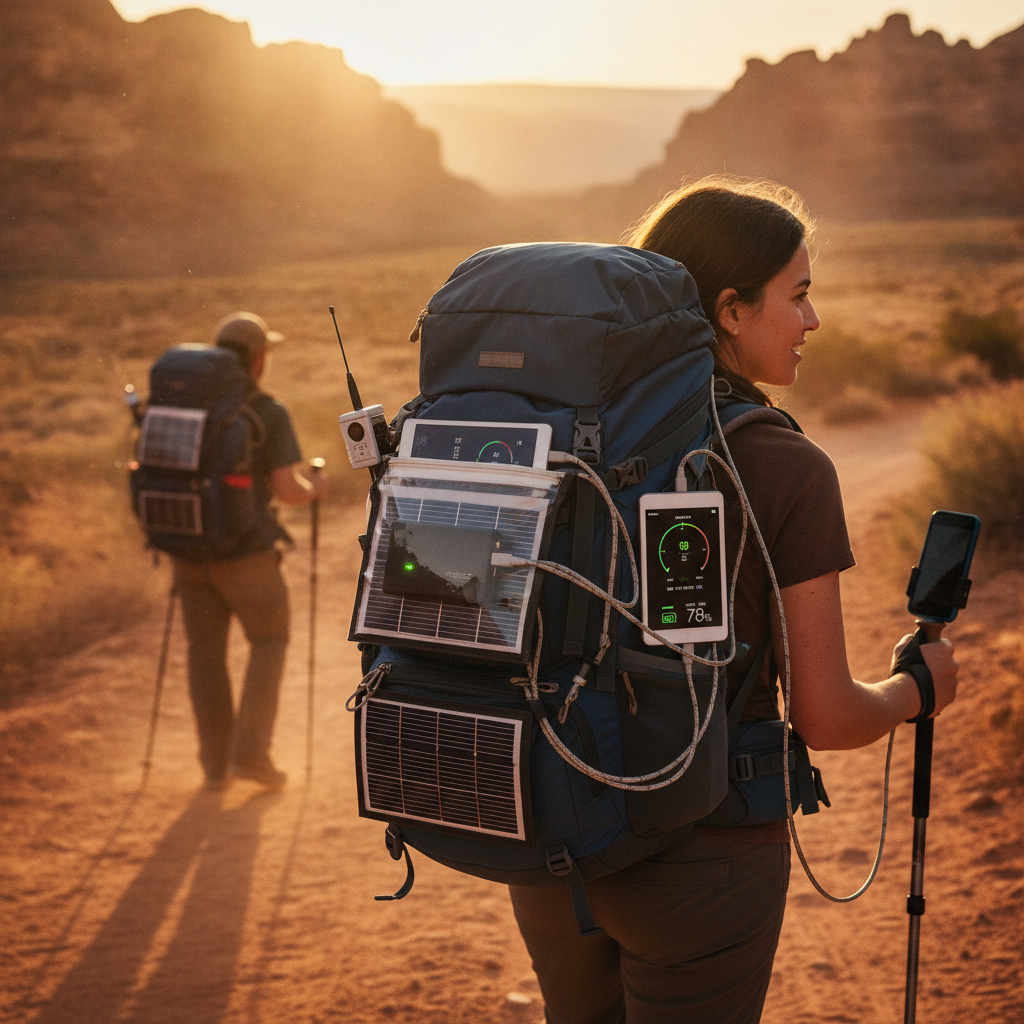
Solar backpacks promised to solve one of travel's most persistent headaches — running out of battery when you're nowhere near an outlet. The pitch is compelling: strap on your pack, walk through a city or hike a trail, and let the sun keep your devices alive. Brands like Voltaic Systems, Solgaard, and BioLite have built entire product lines around this idea, and the marketing specs look impressive on paper. The gap between those specs and what actually happens on the road is where things get complicated.
Understand What Manufacturer Output Claims Actually Measure
Most solar backpack specs are tested under laboratory conditions — direct, perpendicular sunlight at peak intensity, usually around solar noon with no cloud cover and no obstructions. That's not how you carry a bag. When you're walking through Lisbon or trekking in northern Thailand, your panel is angled, partially shaded by your body, or facing away from the sun entirely for stretches of time. Real-world output typically runs at a fraction of the rated wattage. A panel rated at 7 watts might deliver closer to 2–3 watts under typical walking conditions, which changes your charging math significantly.
Test Charging Speed Under Your Actual Travel Conditions
Before counting on your pack for a long travel day, run a real-world test at home or early in your trip. Charge a device you know well — your phone, a small power bank — and track how long it takes compared to a wall adapter. You'll learn exactly what the panel delivers in your climate and at your latitude. Travelers heading to equatorial destinations like Bali or coastal Ecuador will see meaningfully better performance than those moving through overcast northern European cities. Knowing this gap upfront prevents the frustration of arriving somewhere with a near-dead phone.
Pair the Panel With an Internal Battery for Reliable Accumulation
The most effective way to use a solar backpack isn't to charge your devices directly from the panel — it's to use the panel to top off an integrated or attached power bank throughout the day. Voltaic Systems builds several packs this way, where the panel charges an included battery that you then use for pass-through charging. This approach works because the battery accumulates energy even when output is inconsistent, smoothing out the gaps caused by clouds, shade, and panel angle shifts. By the time you sit down for lunch, you may have enough stored to charge your phone once without touching a wall outlet.
Know When USB-C Pass-Through Actually Delivers Full Wattage
USB-C pass-through charging is one of the more misunderstood features on these packs. The label implies your device will charge at normal USB-C speeds, but the actual delivery depends on the panel output at that moment, the controller circuitry in the pack, and whether there's a battery buffering the connection. Without a buffer, you'll often see your device charge at a trickle or not at all when the panel is underperforming. Some packs require the battery to be partially charged before the pass-through circuit activates at all. Read the product documentation carefully — and check community reviews on gear forums where real travelers report actual behavior, not marketing copy.
Factor in Panel Placement and Backpack Orientation for Your Trip Type
A solar panel on the back of a backpack is only useful if the back of the backpack is facing the sun. On urban walking days, this works reasonably well. On seated travel — trains, buses, cafés — the pack is often behind you, inside an overhead bin, or leaned against a wall. Hiking with trekking poles and a heavy load means your torso angle shifts constantly. Some travelers attach a secondary panel to a shoulder strap or the top of a day pack, like the clip-on panels BioLite sells separately, to get better sun exposure across more activities. The point is that panel placement should match your actual movement style, not a generic use case.
Use Overcast Days Strategically, Not as Write-Offs
Diffuse light on cloudy days still produces some solar output — typically around 20–30% of peak performance. It's not nothing. If you're spending a slow morning walking around a market or sitting in a park, a cloudy day in a high-altitude destination like Cusco or a coastal town in the Algarve can still add a meaningful charge to a small internal battery over several hours. Treat overcast conditions as slow-charging time rather than dead time. Building this expectation into your power planning means you won't be caught off guard when the sun disappears for part of a day.
Balance Weight and Output Before Committing to a Pack
Solar panels add weight. More panel surface area means more potential output but also more bulk, and that trade-off becomes real when you're moving through airports or doing distance hiking. A 10-watt panel setup sounds appealing until you realize the pack weighs four kilograms before you've added a single item. For most travelers, a smaller panel in the 5–7 watt range paired with a quality internal battery hits the best balance between useful output and practical carry weight. Solgaard's Carry-On Closet and similar hybrid packs try to split this difference, though they work better for slower, checked-luggage-style travel than fast-moving backpacker routes.
Set Realistic Expectations for Device Compatibility and Charging Priority
Solar backpacks are well-suited to keeping phones and small devices topped off — they're not practical as primary power for laptops or tablets on a full workday. If your travel involves heavy computing, a dedicated portable power station with higher capacity makes more sense. Where solar backpacks genuinely earn their cost is in extended outdoor travel, island-hopping trips, or multi-day routes where wall outlets are scarce and even partial charging is valuable. Setting the right expectation before you buy — not hoping the marketing claims pan out in practice — is the clearest path to getting genuine value from the category.
Solar-charging backpacks are a real and useful piece of travel tech, but they reward travelers who understand their limitations as much as their strengths. Once you've dialed in how your specific pack performs in your specific conditions, you can build it into your power strategy in a way that genuinely helps. Start with one honest test run, adjust your expectations accordingly, and you'll find where a solar pack actually fits into how you travel.
More Trending Articles
How Supermarket Deli Counter Pricing Compares to Pre-Packaged Equivalents and Which Categories Consistently Offer Better Value When You Buy by Weight
Jennifer Walsh
10/27/2026