How Street Food Market Culture in Southeast Asia Shapes the Way Budget Travelers Plan Their Entire Itineraries
Marcus Chen
07/19/2026
5 min read
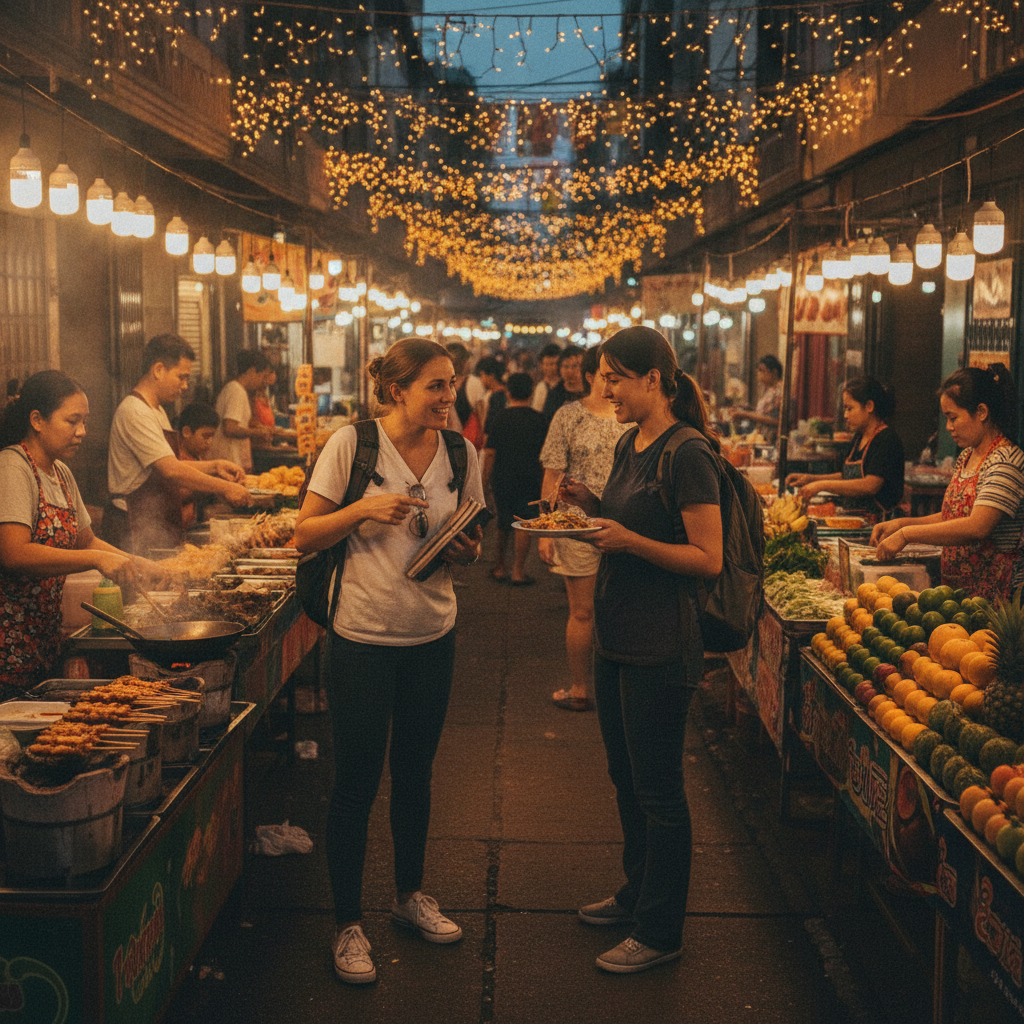
Few forces shape a traveler's experience quite as quietly and completely as food — and in Southeast Asia, that force takes the form of the street market. Long before a budget traveler books a guesthouse or maps out a temple route, the promise of a steaming bowl of pho in Hanoi or a late-night plate of pad see ew from a Bangkok cart is already doing the work of itinerary planning. Street food markets in this region aren't simply places to eat cheaply. They are social institutions, neighborhood calendars, and cultural archives all compressed into a few blocks of plastic stools, charcoal smoke, and vendor calls. Understanding how deeply this culture influences the modern budget traveler reveals something important about what value in travel actually means.
How Does Street Food Actually Rewire a Travel Schedule?
The rhythm of Southeast Asian street markets is not something travelers adapt to — it's something they get absorbed into, often without noticing. Night markets in Chiang Mai operate on cycles that seasoned visitors come to treat like timetables. The Sunday Walking Street along Wualai Road, for instance, runs only once a week, and budget travelers frequently plan their entire Chiang Mai stay around it, arriving a day early or staying a day longer just to be there. This kind of food-anchored scheduling extends across the region. In Penang, the hawker stalls of Gurney Drive follow a rhythm that shifts between breakfast nasi lemak vendors and evening grilled seafood spreads, and travelers who learn that rhythm find their days organizing themselves almost automatically around those anchor points. A guesthouse booking becomes a decision about walking distance; a day trip gets timed around a return before the evening rush.
This is not incidental. Budget travelers operating on tight daily allowances discover quickly that street markets aren't just the cheapest meal option — they're the most generous one in terms of variety, freshness, and spontaneity. A single market block in George Town or Ho Chi Minh City's Bến Thành market district can offer more culinary range than a week of restaurant dining at twice the cost. So the market becomes the base of operations, and everything else — temples, museums, transport connections — gets arranged around it.
What Makes These Markets Different From Other Food Destinations?
Street food markets in Southeast Asia carry a cultural weight that sets them apart from night markets in, say, Europe or South America. Many of these spaces have operated continuously for generations, with vendor families holding the same corner stall for decades. The hawker culture of Malaysia and Singapore — a term referring to the broader ecosystem of open-air cooked food stalls — was recognized by UNESCO as intangible cultural heritage, which signals something that experienced travelers already sense when they sit down at a communal table: this is not a tourist construct. The food exists because the community needs it, and the traveler is simply welcome within it. That distinction matters enormously to how a place feels. Markets like Talat Rot Fai in Bangkok or the night market strip near Hội An's Old Town are living spaces, not performances.
For budget travelers, this authenticity carries practical weight. When a market exists to serve locals first, prices stay honest, portions stay generous, and quality stays consistent. Vendors compete on flavor and reputation, not on attracting foot traffic from passing visitors. A traveler who finds a reliable bánh mì cart near their guesthouse in a Vietnamese provincial town has found something genuinely valuable — not just a cheap breakfast, but a daily anchor that makes that town feel like somewhere to inhabit rather than somewhere to visit.
How Do Travelers Use Markets to Unlock Smarter Budgeting?
The financial logic of building an itinerary around street food markets is straightforward, but the behavioral shift it requires is more interesting. Travelers who structure their days around market culture tend to spend less on transportation, because markets draw them into walkable neighborhoods rather than tourist corridors accessible only by taxi or tour. They spend less on entertainment, because the market itself is the entertainment — watching roti canai being stretched and folded, or seeing a laksa broth ladled with practiced efficiency, is an experience that no ticketed attraction can replicate. Apps like Google Maps and local discovery tools such as HappyCow or even community threads on Tripadvisor have made it easier to locate specific stalls and plan around opening hours, adding a layer of logistical intelligence to what was once purely serendipitous exploration.
The cumulative effect on a travel budget is significant. Travelers who eat two or three market meals a day across a two-week trip through Vietnam, Thailand, or Malaysia often find they've freed up enough in daily food costs to extend their trip by several days, upgrade a key overnight journey, or absorb an unexpected expense without stress. The market doesn't just feed the traveler — it reshapes what the trip can be.
Where Does This Culture Invite You to Slow Down?
Perhaps the most lasting influence of Southeast Asian street food culture on budget travel isn't financial at all — it's temporal. Markets invite a slower kind of movement. When you find a stall that earns your loyalty, whether it's a kway teow vendor in Ipoh or a mango sticky rice cart at the edge of a Siem Reap evening market, you return. And returning to the same place each day creates something that most fast itineraries don't allow: a sense of belonging to somewhere, even briefly. Budget travel at its best isn't about seeing the maximum number of places on the minimum possible spend. It's about experiencing a place genuinely, and in Southeast Asia, the street food market is one of the most honest doorways into that experience. The traveler who arrives in a city, finds their market, and lets the neighborhood reveal itself from there tends to leave with something more textured than a highlight reel — they leave with a sense of how a place actually lives.
The scene that draws a traveler to Southeast Asia in the first place — that half-imagined image of warm evening air, glowing vendor lights, and the sound of a wok crashing against a flame — turns out to be exactly as real as promised. What surprises most people is how completely that single scene becomes the organizing principle of everything else: where to stay, how long to linger, which town to linger in. The street food market doesn't just feed the budget traveler. It gives the trip its shape.
More Trending Articles
How Supermarket Deli Counter Pricing Compares to Pre-Packaged Equivalents and Which Categories Consistently Offer Better Value When You Buy by Weight
Jennifer Walsh
10/27/2026